Sinking pavers are one of the most common hardscape problems we see in New York. A low spot shows up in the patio, and water starts to pool after rain. Then a few pavers begin to rock underfoot. It's easy to ignore at first. But a small dip usually grows, and it can turn into a trip hazard fast.
The good news is that sinking pavers are rarely a sign that the pavers themselves are bad. In most cases, the problem sits underneath the surface. The base, the drainage or the joints have failed somewhere, and the pavers are simply following the ground below them.
In this guide, we'll walk through why pavers sink and how to spot the warning signs early. We'll also show what a proper repair looks like. We'll also cover when a patch is enough and when a larger section needs to be rebuilt. If your patio, walkway or driveway has started to dip, this will help you understand what's going on.
What Causes Pavers to Sink in New York
Almost every sinking paver problem traces back to the base. Pavers sit on a layer of compacted gravel topped with bedding sand. If that gravel wasn't compacted well during installation, it settles over time, and the pavers go down with it.
Water is the second big cause. When rain and snowmelt can't drain away, they soften the base and wash out fine material. Downspouts that empty onto a patio are a common culprit.
New York winters add another layer of stress. Water in the base freezes, expands and lifts the pavers, then thaws and leaves gaps behind. After a few seasons of freeze and thaw, low spots start to appear, especially near edges and downspouts.
Warning Signs You Shouldn't Ignore
Sinking pavers don't happen overnight, so it helps to know what to watch for. The first sign is often a puddle that sits in the same spot after every rain. That standing water means the surface has lost its slope.
Next, look for pavers that rock or shift when you step on them. Wide or empty joints are another clue, because missing joint sand lets pavers move freely.
You may also notice edges that spread outward or pavers that sit higher than their neighbors. Weeds growing in one area more than others can point to open joints and movement below. Catching these signs early usually means a smaller, simpler repair.
How Paver Releveling Works
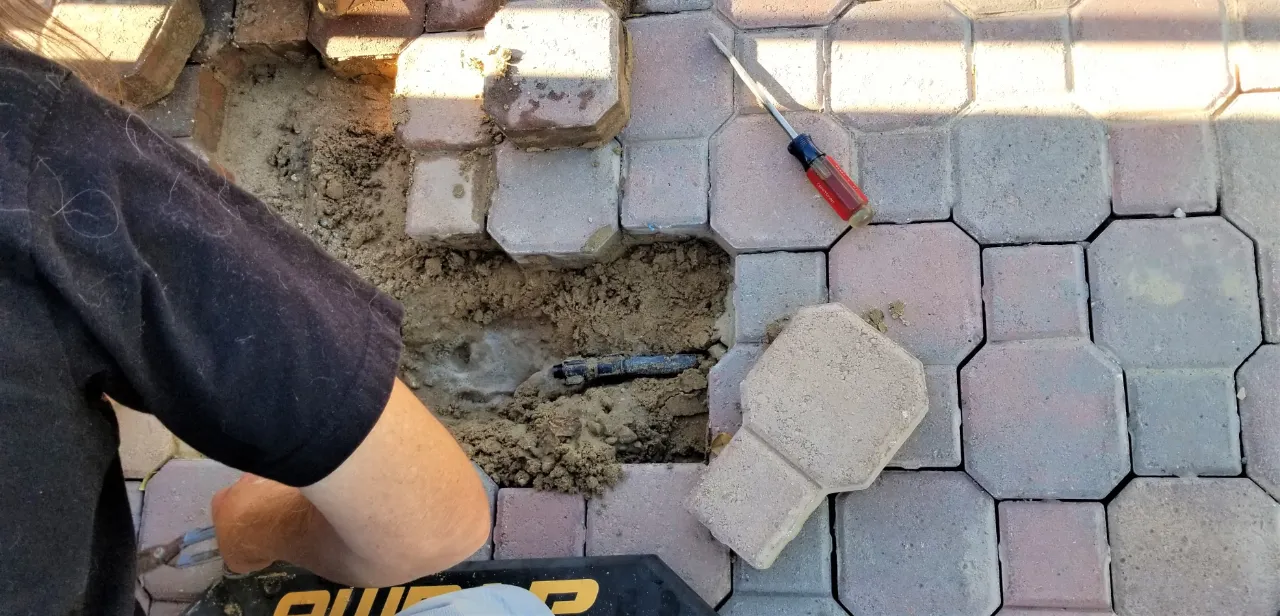
The fix for most sinking pavers is releveling. It's a targeted repair, not a full replacement. First, the affected pavers are lifted out and set aside. Then the old bedding sand is removed so the base underneath can be inspected.
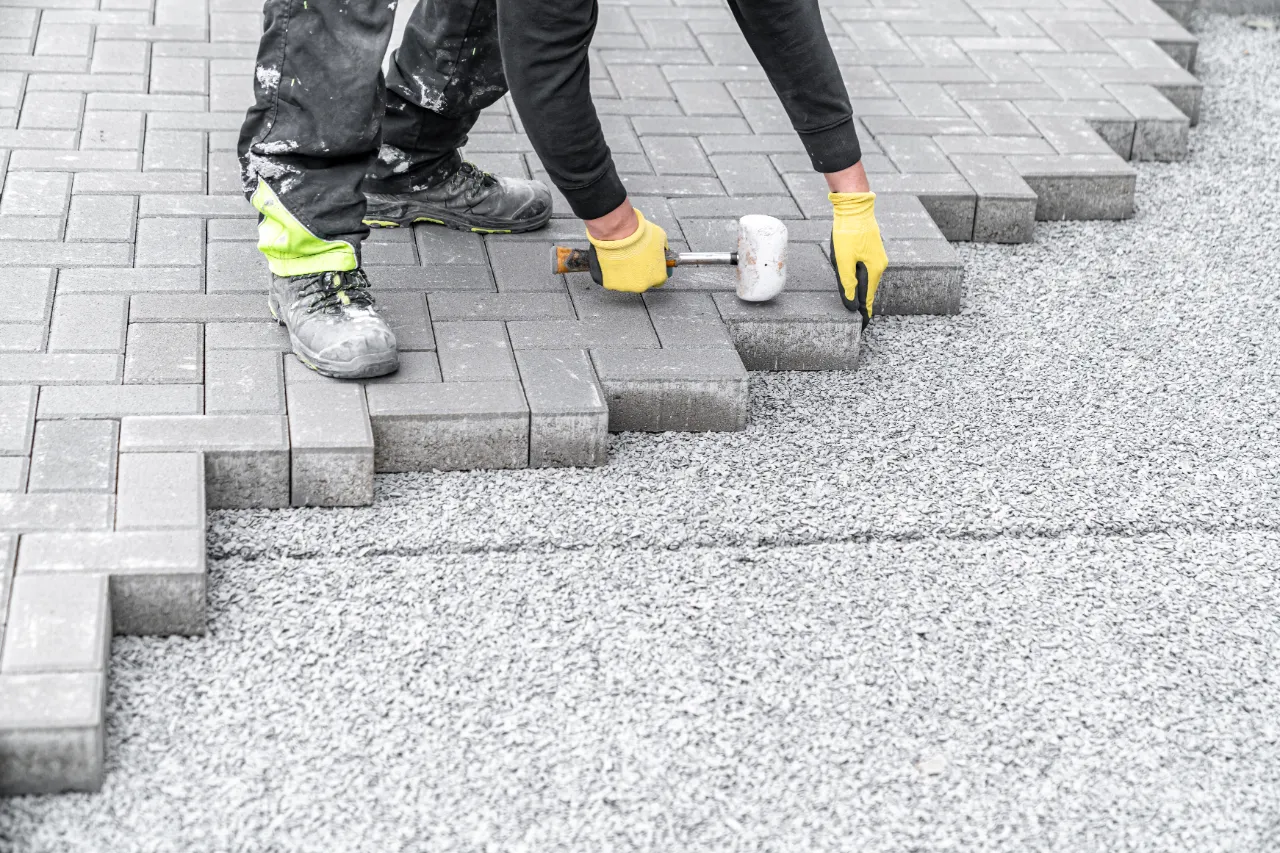
If the gravel base has settled, new base material is added and compacted in layers. Next comes a fresh layer of bedding sand, screeded to the right slope. The original pavers go back in place, edges are secured and the joints are filled with polymeric sand.
Done right, the repaired section blends in with the rest of the surface. Water drains again, and the pavers sit tight and level. It's also the right time to fix any drainage issue that caused the problem.
When a Bigger Repair Makes Sense
Releveling works well for isolated low spots. But large areas may be sinking, or the problem may keep coming back in new places. That usually means the base has failed under the whole surface. In that case, rebuilding a larger section is often the smarter long term choice.
Poor drainage is another reason to think bigger. If water has nowhere to go, releveling alone will only buy time. Regrading, redirecting downspouts or adding drainage may be needed first.
A good contractor will tell you honestly which approach fits your situation. The goal is a repair that lasts, not one that looks good for a single season. Once the surface is stable, sealing can help protect it going forward.