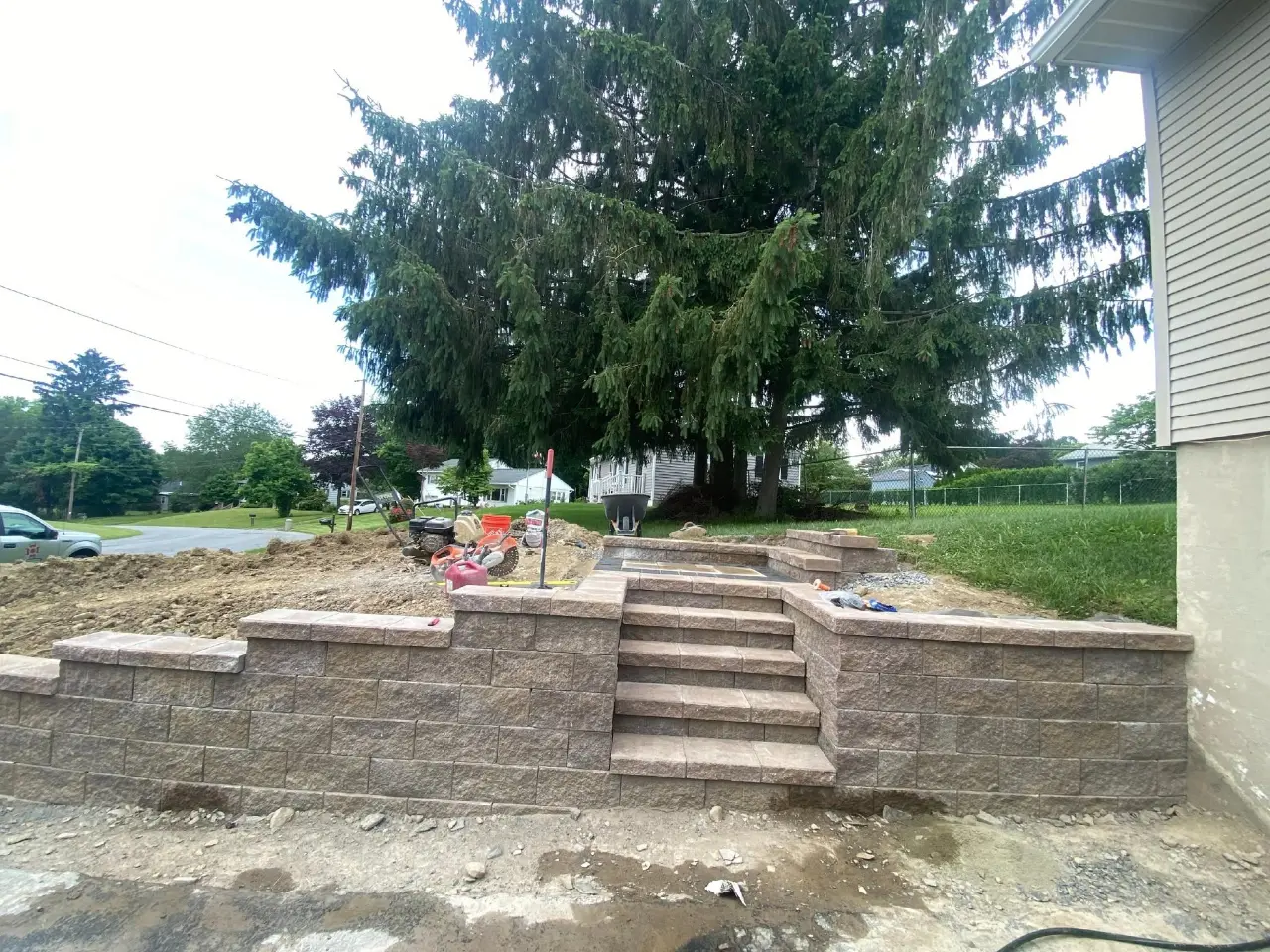
A leaning retaining wall is hard to miss once you notice it. The top edge no longer looks straight, a section bulges outward or a few blocks have started to crack. If you're seeing this on your New York property, you're right to pay attention.
Retaining walls hold back a lot of weight. Soil, water and frost all push against the back of the wall every day. When a wall starts to lean, it's telling you that the force behind it is winning. Some walls lean slowly for years. Others move faster after a wet season or a hard winter.
In this guide, we'll explain why retaining walls lean and which warning signs call for quick action. We'll also walk through your repair options. We'll also cover how a properly built wall handles water, since drainage is at the heart of almost every failure. The sooner you understand the cause, the easier the fix tends to be.
The Main Reason Retaining Walls Lean
In most cases, the problem is water. Rain and snowmelt soak into the soil behind the wall. If that water can't drain out, it builds pressure, and saturated soil is much heavier than dry soil. Over time, that pressure pushes the wall forward.
A well built retaining wall has drainage stone behind it and a perforated pipe at the base. Together, they give water an easy path out. Many older or DIY walls skip this step, and those are the walls that tend to lean first.
In New York, frost makes things worse. Water trapped behind the wall freezes and expands, pushing the blocks a little further each winter.
Other Causes of Wall Failure
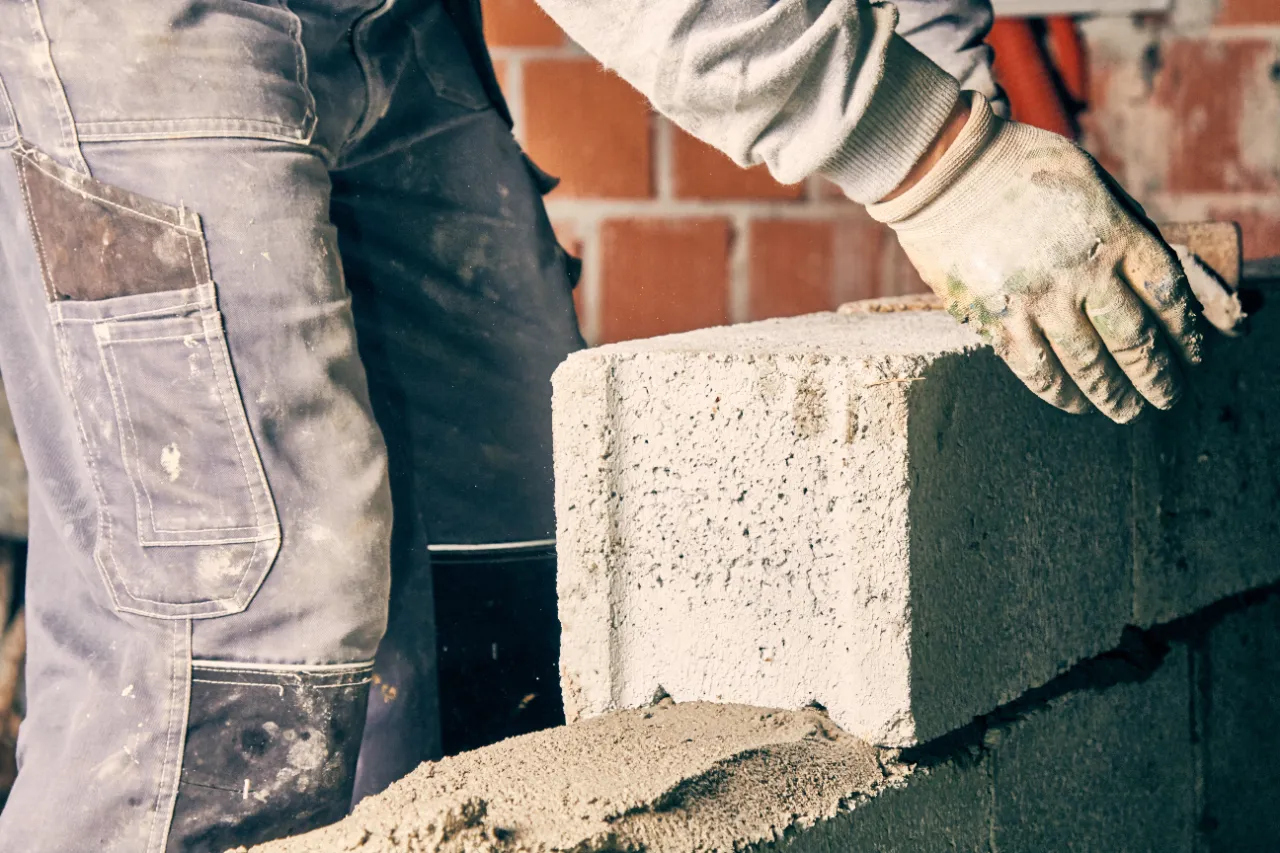
Drainage isn't the only issue. A shallow or poorly compacted base lets the bottom of the wall settle unevenly, which tips the whole structure. Walls also need to be buried partly below grade to resist sliding.
Height matters too. Taller walls carry much more load and often need reinforcement, such as geogrid layered into the soil behind them. Without it, the wall relies only on its own weight, and that may not be enough.
Tree roots, added weight at the top of the slope and heavy equipment parked nearby can all add pressure. Sometimes the cause is a mix of several small problems that build up over years.
Warning Signs That Need Attention
Some movement is gradual, but certain signs mean you shouldn't wait. A visible bulge in the middle of the wall is a clear sign of pressure from behind. So are cracks that run through several blocks or stones.
Watch for gaps opening between the wall and the soil at the top. Leaning that gets worse from one season to the next is another red flag. Water seeping through the face of the wall, or soil washing out at the base, points to drainage failure.
If a wall sits near a driveway, walkway or play area, take any sudden change seriously. Keep people and vehicles away from a wall that's actively moving until someone can inspect it.
Repair Options for a Leaning Wall
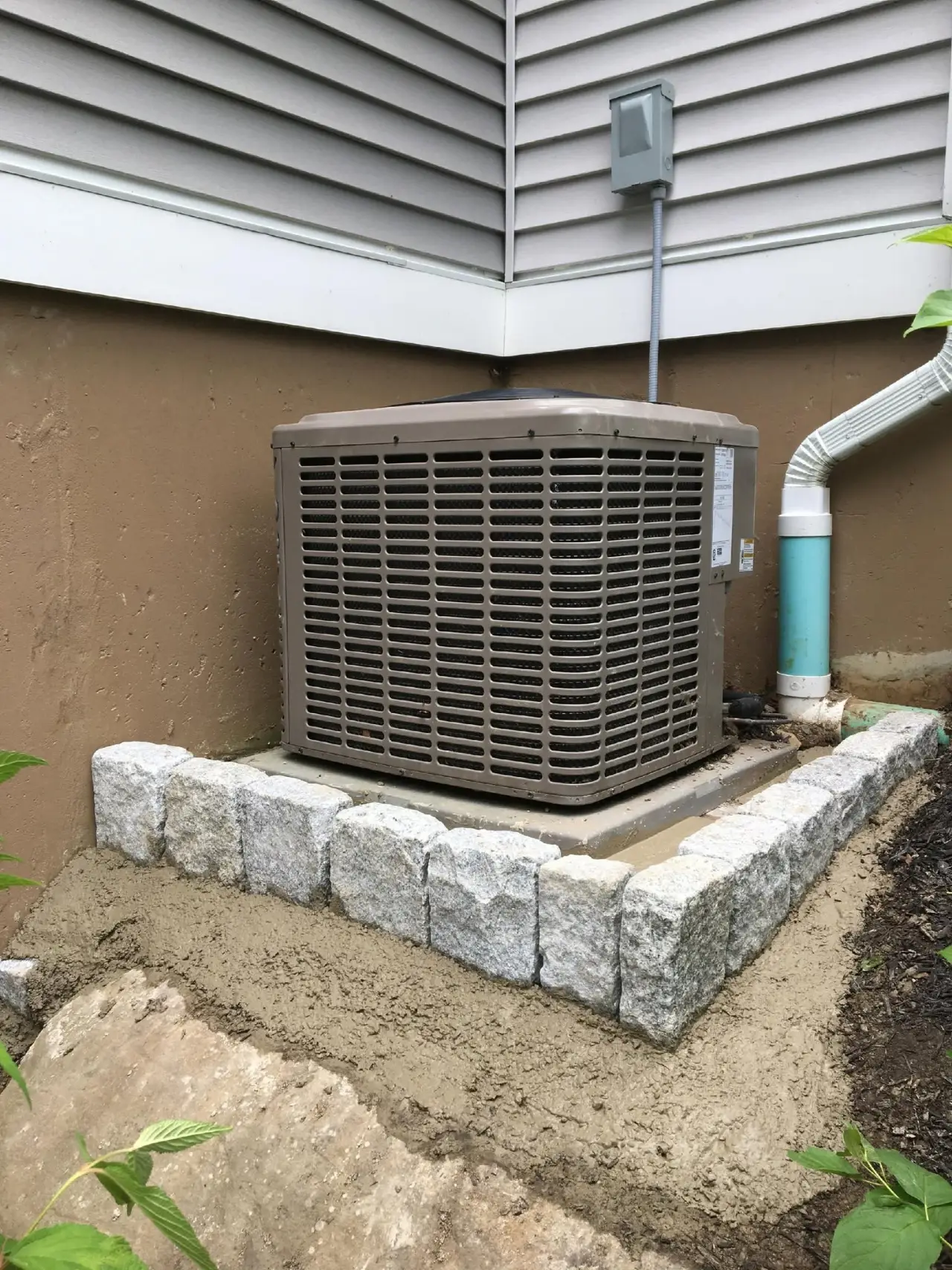
The right repair depends on how far the wall has moved and why. For minor leaning, correcting drainage and resetting the top courses may be enough. That often means excavating behind the wall to add drainage stone and pipe.
When a wall has shifted significantly, the lasting fix is usually to take it down and rebuild it. The contractor excavates, builds a proper compacted base, adds drainage and reinforcement where needed and resets the blocks or stone.
Rebuilding sounds like a big step, but it's often cheaper than repeated patch jobs. Taller walls may also need local approval, so check with your town before major work. A careful inspection is the first step toward the right plan.